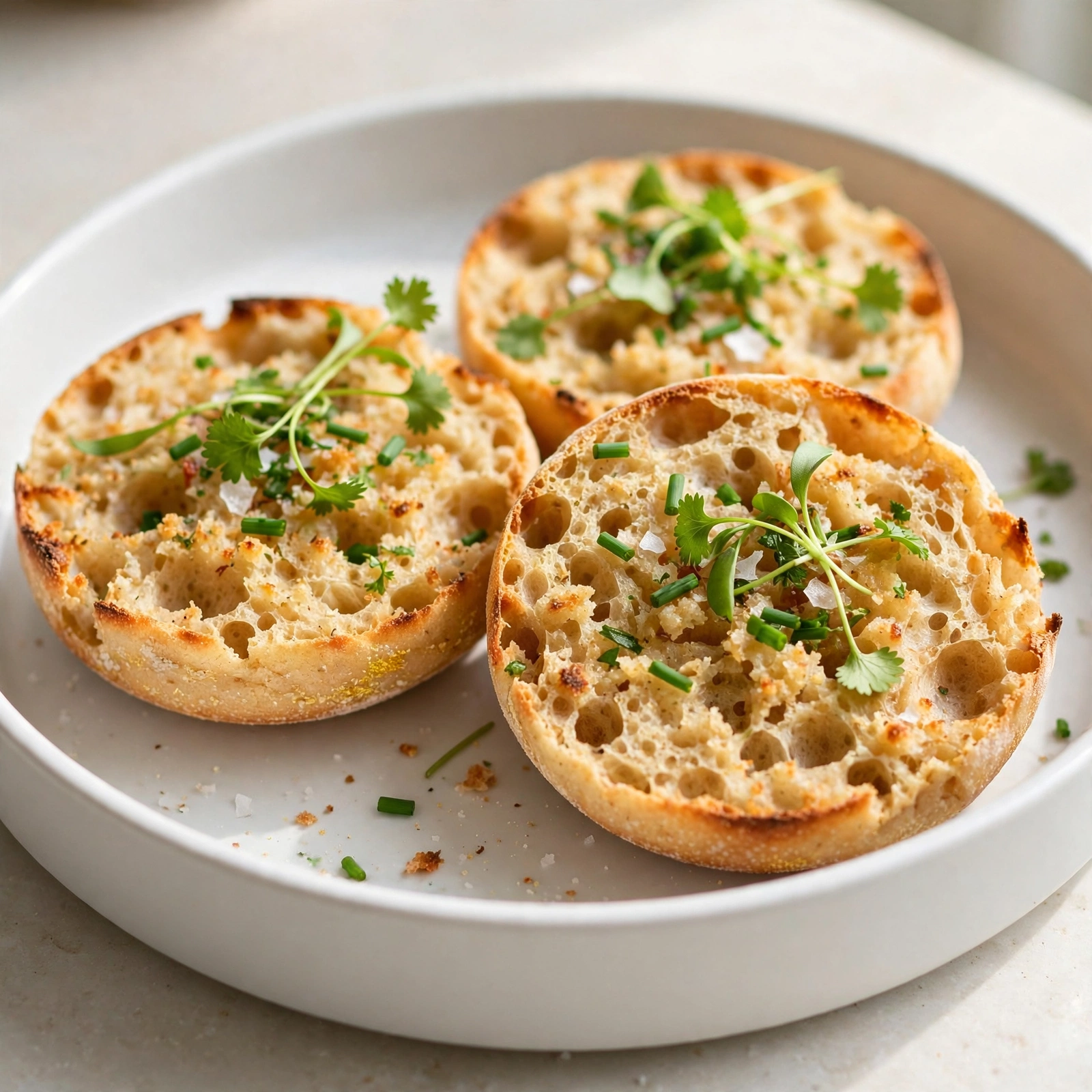
Sourdough Discard English Muffins with Nooks & Crannies
Homemade sourdough English muffins made with discard, griddled to golden perfection and packed with the nooks and crannies that make them perfect for butter and jam.
Why This Sourdough Discard English Muffin Recipe Works
If you have ever wondered how to make English muffins with sourdough starter without wasting your precious active levain, this recipe is for you. It uses sourdough discard, that jar of bubbly, slightly sour leftovers you would otherwise toss, and turns it into golden, griddle cooked muffins full of the nooks and crannies that make store bought muffins famous in the first place.
This is a genuinely easy sourdough English muffins recipe. There is no yeast packet to manage and no long overnight ferment required, though you can do one if you like the extra tang. Just discard, flour, milk, and a hot griddle. The result is a homemade sourdough English muffin recipe that tastes far better than anything from a plastic sleeve at the store, with a subtle tang that plain English muffins simply do not have.
Before we get cooking, the right tools and ingredients make a real difference here. A good biscuit cutter gives you clean, even rounds, a heavy cast iron griddle cooks low and slow without hot spots, and a solid dough whisk makes mixing sticky discard dough much less messy.
The Secret to Those Famous Nooks and Crannies
The signature texture of a great English muffin comes down to a few small choices:
- A wet, slightly sticky dough. Resist the urge to add too much extra flour while kneading. A soft dough steams more as it cooks, which creates those irregular little tunnels inside.
- A gentle hand when shaping. Pat the dough into a slab instead of rolling it firmly with a pin. Rolling pushes air out, and we want to keep it in.
- Low, patient heat. Cooking too hot will brown the outside before the inside sets, leaving you with a dense, gummy middle instead of an open, airy crumb.
Chef's Tip: Resist flipping the muffins too often. Let each side cook undisturbed for the full time so a proper crust forms before you turn them.
A Simple, No Yeast Approach
Many people search for sourdough English muffins no yeast because they want that classic tang and chew without managing a separate rise with commercial yeast. This recipe leans entirely on your sourdough discard and a touch of baking soda for lift, which keeps things simple while still giving the muffins a gentle rise on the griddle.
If your starter is fed and bubbly rather than true discard, that is perfectly fine too. Either way, you are working toward the same goal, a soft, tender crumb wrapped in a crisp, cornmeal dusted exterior.
This method also makes it easy to build a rhythm around your starter maintenance. Every time you feed your sourdough starter, set the discard aside in the fridge, and once you have a full cup, you have got sourdough English muffins from scratch ready to go.
Ready to make it? Here is the full step by step recipe:
Sourdough Discard English Muffins with Nooks & Crannies
Homemade sourdough English muffins made with discard, griddled to golden perfection and packed with the nooks and crannies that make them perfect for butter and jam.
Ingredients
- 1 cup sourdough discard, unfed, straight from the fridge is fine
- 3/4 cup warm milk, whole milk preferred
- 2 1/2 cups all-purpose flour, plus more for dusting
- 1 tbsp granulated sugar
- 1 tsp fine sea salt
- 1/2 tsp baking soda
- 2 tbsp unsalted butter, melted and slightly cooled
- 1/4 cup cornmeal, for dusting
- 1 tbsp neutral oil, for greasing the griddle
Instruction
In a large bowl, whisk together the sourdough discard, warm milk, sugar, and melted butter until smooth.
Add the flour, salt, and baking soda. Stir with a wooden spoon or dough whisk until a shaggy, sticky dough forms.
Turn the dough out onto a lightly floured surface and knead gently for 3 to 4 minutes, just until it comes together. The dough will remain soft and slightly tacky.
Shape the dough into a ball, place it back in the bowl, cover with a damp towel or plastic wrap, and let it rest at room temperature for 1 to 2 hours, or until noticeably puffy.
Line a baking sheet with parchment and dust generously with cornmeal. Turn the dough out onto a floured surface and pat it gently into a 3/4 inch thick slab. Avoid using a rolling pin, since a light touch keeps the air pockets intact.
Cut out rounds using a 3 inch biscuit cutter or a wide-mouth jar lid, pressing straight down without twisting. Gather scraps, gently repat, and cut again.
Place the rounds on the prepared sheet, dust the tops with more cornmeal, cover loosely, and let rest for 30 to 45 minutes while you heat the griddle.
Heat a large skillet or griddle over low to medium-low heat and brush lightly with oil.
Cook the muffins in batches for 6 to 8 minutes per side, adjusting the heat as needed so the outside browns slowly while the inside fully cooks through. They should sound hollow when tapped.
Transfer to a wire rack to cool for at least 10 minutes before splitting.
Split with a fork rather than a knife to preserve the nooks and crannies, then toast and serve with butter.
Equipment
- Large mixing bowl
- Dough whisk or wooden spoon
- 3 inch biscuit cutter
- Cast iron skillet or griddle
- Wire cooling rack
- Bench scraper
Notes
Serving, Storing, and Variations
Fresh off the griddle, these muffins are wonderful split, toasted, and slathered with butter and good jam. They also make an excellent base for eggs Benedict or a breakfast sandwich, since the sturdy crumb holds up well to sauce and toppings without falling apart.
For variations, try folding in:
- A handful of shredded sharp cheddar for a savory version
- A teaspoon of cinnamon and a spoonful of raisins for a sweeter breakfast muffin
- Everything bagel seasoning pressed into the tops before cooking
Chef's Tip: Always split cooled muffins with the tines of a fork rather than slicing with a knife. Forking along the edge preserves the airy pockets instead of compressing them flat.
However you serve them, this homemade sourdough English muffin recipe turns a jar of discard into something genuinely worth waking up for.